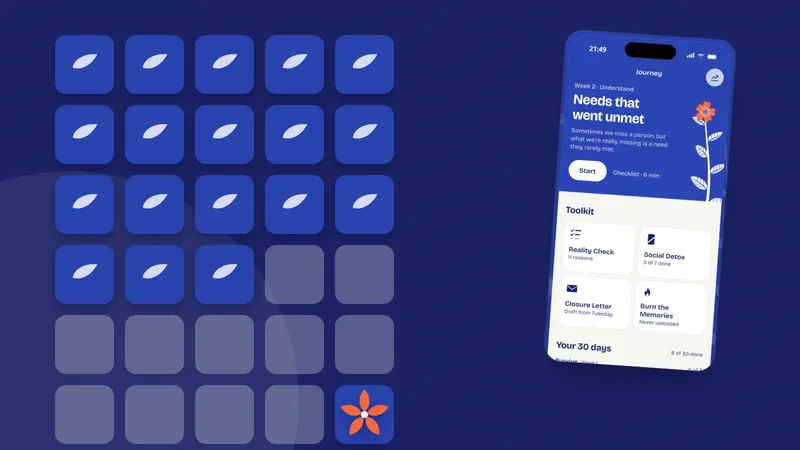


Most people move through four broad stages after a breakup: Survive (shock, pain and urges), Understand (making sense of what happened), Rediscover (reconnecting with yourself and your life) and Rebuild (making new routines and choices). The stages overlap and you may move back and forth. That is normal, not a setback.
The short version
- Stages are a map, not a schedule. Going backwards for a day is normal.
- Survive first: No Contact, sleep, food and people.
- Understanding is not blaming. It is learning.
- Rebuilding starts small: one routine, one plan, one new place.
What about the five stages of grief?
You have probably seen breakups described with the five stages of grief: denial, anger, bargaining, depression and acceptance. That model was first written about people facing death, and even its author said the stages are not a fixed sequence. Many people recognise the feelings: the "maybe we can fix this" of bargaining, the anger at 3 a.m. But very few go through them in order.
So we use a simpler map, built around what you can do at each point. It is the same structure as Lumi's 30-day Journey.
Stage 1: Survive
The first days and weeks. Shock, crying, not sleeping, checking your phone, replaying conversations, strong urges to reach out. It can feel physical, and that is not your imagination: rejection activates some of the same brain systems as physical pain.
What helps: No Contact, the basics (sleep, food, water, daylight), one or two people you can lean on, and a plan for the moments you want to text your ex.
Stage 2: Understand
Once the sharpest pain eases, questions arrive: why did it end, what went wrong, what did I miss? This stage can slide into blaming yourself or obsessing over them. The goal is understanding, not a verdict.
What helps: writing it out. A reality-check list of what was not working. An unsent letter. Noticing patterns from past relationships. Talking it through with a friend or a therapist.
Stage 3: Rediscover
You start remembering who you are outside the relationship. Friends you saw less, hobbies you dropped, places you stopped going. Some days feel surprisingly light; others pull you back to stage 1. Both are normal.
What helps: say yes to small plans, try one new thing a week, go to places that are just yours, move your body in a way you enjoy.
Stage 4: Rebuild
This is where you make choices for the life ahead: routines that stick, boundaries you want to keep, what you want in a future relationship. You can think about your ex without it taking over your day.
What helps: a few steady routines, a plan to look forward to, and writing down what you learned so you take it with you.
Going back a stage is normal
A song, an anniversary, a photo on someone else's feed can pull you right back to day one for an evening. It does not erase your progress. Over time the dips are shorter and further apart. If you keep track of your days and moods, you will see the trend even when a single day feels bad.
When a stage lasts too long
If you feel stuck in the first stage for many weeks, cannot sleep or eat, or feel hopeless, please talk to a doctor or a mental health professional.
Questions people ask
What are the stages of a breakup?
Many people describe four broad stages: Survive, Understand, Rediscover and Rebuild. Others use the five stages of grief. Either way, the stages overlap and do not follow a strict order.
Which stage of a breakup is the hardest?
For most people, the first: the shock, the urges and the sleepless nights. It is also the stage where No Contact and basic care make the biggest difference.
How long does each stage last?
It varies. The first stage often lasts days to a few weeks. The others overlap and stretch over months. Track the trend, not the calendar.
Sources
This guide is general information, not therapy or medical advice.