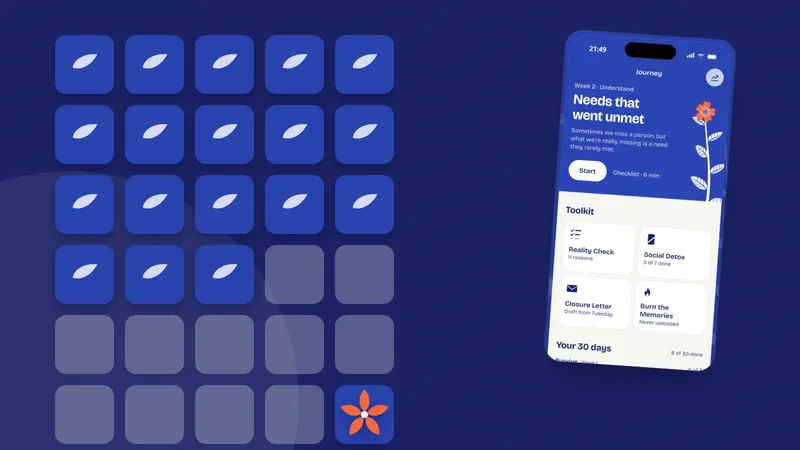

Start with at least 30 days of No Contact, then extend it. Many people need 60 to 90 days, and plenty never go back to regular contact. There is no research proving a specific number. What matters is how you feel: keep going until you can think about your ex without a strong urge to reach out or check on them.
The short version
- The popular numbers (21, 30, 45, 60, 90 days) are rules of thumb, not science.
- 30 days is a good first commitment because it is long enough to feel a difference.
- Longer relationships and messier endings usually need longer.
- If you have to stay in touch, use low contact: logistics only.
Where the numbers come from
Search for "how long should No Contact last" and you will get a different answer from every site. Some say a minimum of 21 days, many say 30, some coaches use 45, and others recommend 60 or 90 days after a hard breakup. Most of these numbers come from dating advice and coaching, not from studies, and some depend on whether the goal is to heal or to get an ex back.
That does not make them useless. They are a way to make an open-ended task feel finite. Just do not treat any number as a guarantee.
What actually decides how long you need
| Factor | Usually means |
|---|---|
| How long you were together | Longer relationships tend to need longer. |
| How it ended | A sudden or painful ending, or betrayal, often takes more time. |
| Whether you must stay in touch | Shared children, a home or a job make full silence harder: use low contact. |
| What else is going on | Stress, isolation or other losses can slow things down. |
| Your goal | If you are healing, go by how you feel. If you are waiting for them, you will feel stuck at any length. |
A simple way to choose your number
Commit to 30 days
It is long enough for the first wave to pass and short enough to feel possible today.
Check in at day 30
Ask yourself: do I still check their profile? Do I still draft messages? Would contact today set me back?
Extend if the answer is yes
Add another 30 days. Most people do at least once.
Decide what contact you actually want
By 60 to 90 days, many people realise they do not want regular contact at all, and that is fine.
Signs you might be ready to end No Contact
- You can see their name without your stomach dropping.
- You no longer draft messages in your head.
- You do not need anything from them: no apology, no answer, no reaction.
- You would be fine if they did not reply.
- You have a life that feels like yours again.
If most of these are not true yet, it is not time. That is not failure. It just means the healing is still going on.
Low contact: when you cannot go fully silent
If you share children, a home, a lease or a workplace, total silence may be impossible. Low contact keeps the spirit of the rule:
- Talk only about logistics: times, money, documents, the children's needs.
- Use one channel, such as email or a co-parenting app, not your personal chat.
- Keep messages short, polite and factual. No small talk.
- Do not discuss the relationship or your feelings.
- Still stop checking their social media. That part is always yours to control.
Restarting the count after a slip
If you break No Contact, the count starts again, but what you learned does not. Most people slip at least once. Notice what set it off and plan for it. Read more about the No Contact rule and how to keep it.
Questions people ask
Is 30 days of No Contact enough?
For some people it is enough to feel steady; for many it is a strong start. Check in at day 30 and extend if you still check on them or draft messages.
Does No Contact work after 60 days?
If your goal is to feel better, yes: most people find the urges much quieter by then. If your goal is to get your ex back, no number of days guarantees that.
Should No Contact last forever?
It does not have to, but many people find they do not want regular contact with an ex at all. You can decide later, from a steadier place.
Does low contact count as No Contact?
It keeps the spirit of it. When you must stay in touch, limiting contact to logistics protects your recovery almost as well.
Sources
This guide is general information, not therapy or medical advice.